
I learned this the hard way and I’m still salty about it.
So my wife and I found this solid wood dresser at an estate sale a few years back. Mid-century thing, beautiful shape, dovetail drawers, all that good stuff. Paid a hundred bucks for it and felt like we’d stolen it. I spent an entire weekend refinishing that thing. Sanded everything down, stained it this dark walnut color, sealed it up nice. Looked perfect. We put it in our bedroom right next to the window.
Big mistake.
Come February I go to grab a sweater from the top drawer and the damn thing won’t open. I pull harder. Nothing. I end up yanking it out at some weird angle and scratch the hell out of the side. Then a week later I notice this hairline crack running across the top.
I was so mad. Thought I’d done everything right. What I didn’t realize was that I’d parked that poor dresser in the worst possible spot during the worst possible time of year.
Turns out furniture is way more sensitive to weather than most people realize. And if you’ve got stuff you actually care about, you need to know what you’re dealing with.
Here’s What’s Actually Happening
Let me break this down simple because nobody told me and I wish they had.
Wood breathes. Sounds weird but it’s true. Think of it like a sponge. When there’s moisture in the air, wood soaks it up and gets bigger. When the air dries out, wood lets go of that moisture and gets smaller.
This happens slow so you don’t notice day to day. But over months? Yeah you notice.
Ever have a drawer that slides fine in December but sticks like crazy in August? That’s the wood swelling from summer humidity.
Ever see little cracks show up in a table or headboard around January? That’s the wood shrinking from winter dryness.
Same thing happens with other stuff too:
- Leather dries out and cracks when the air gets too dry. I’ve got an old chair in my office that looks terrible because I used to keep it right next to a heat vent.
- Fabric holds onto moisture like crazy. Leave a couch in a damp basement over summer and you’ll be throwing it away by fall.
- Metal can rust if humidity stays high enough. Those little screws in chair frames? Yeah they’re vulnerable.
The crazy part is most of this damage is totally preventable. You just gotta know what you’re dealing with.
What I Do Now
Alright enough depressing stuff. Here’s what actually works. I do all this myself and my furniture has been way happier since I started.
Move Your Stuff Away From Problem Spots
Walk through your house right now. Like actually get up and look around.
Where’s your couch? If it’s pushed right up against an outside wall that’s trouble. In winter that wall is cold. In summer it might be warm or even damp. That temperature difference creates moisture. And moisture behind your couch means mildew. I’ve seen it happen and it’s nasty.
Can you pull it away even a few inches? Do it. Your couch will last longer.
What about your bed? Is the headboard against a window? In winter that glass gets freezing cold and you get water running down the panes. That water can soak into wood or fabric and cause problems. I moved my bed away from the window last year and stopped having mystery damp spots on my pillows.
Vents are sneaky too. If you’ve got a dresser or bookshelf sitting right over a floor vent, all that hot or cold air is blasting right onto it. In winter that dries the wood out way faster than normal. In summer the AC does the same thing. If you can’t move the furniture at least get one of those little plastic vent deflectors that redirects the air. They cost like five bucks.
Windows are brutal on furniture too. That sunny spot might be great for your plants but UV rays will fade fabric and bleach wood finishes over time. I had a chair that sat in front of a window for about a year and one side ended up noticeably lighter. Now I rotate my furniture every few months so the sun doesn’t hit the same spot forever.
Get a Humidity Meter Already
This sounds like overkill but trust me it’s not. You can pick up a little humidity meter for like ten bucks at any hardware store. Probably cheaper online.
Just having it in the room lets you see what’s actually happening. You might be surprised.
I put one in my living room last summer and couldn’t believe it when I saw it hit 70 percent. No wonder the room felt sticky. No wonder I couldn’t stop sneezing.
The sweet spot for furniture is somewhere between 40 and 50 percent humidity. Not too wet not too dry.
If you’re running high in summer get a dehumidifier. I run mine in the basement mostly because that’s where it gets dampest but I’ll move it upstairs on really humid days. Empty it regular. The amount of water it pulls out of the air is honestly kind of gross but also really satisfying.
If you’re running low in winter when the heat’s on all the time get a humidifier. Adds moisture back into the air. Your furniture will thank you. Your skin will thank you too. My hands used to crack every winter until I started doing this.
Give Your Stuff Some Attention Twice a Year
You don’t need to go crazy with maintenance. Just pick two times a year. Maybe when you change your clocks or when the seasons really shift. Do a little furniture upkeep while you’re at it.
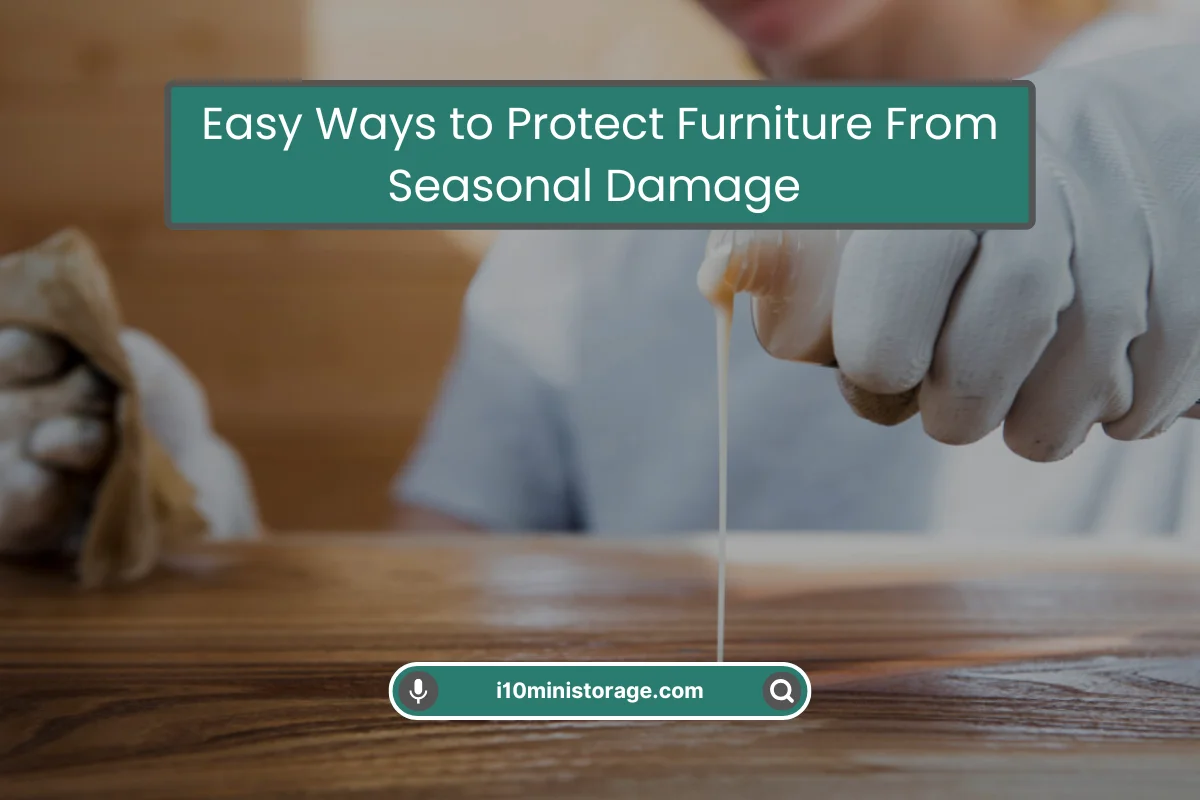
For wood get some real furniture wax. Not the spray stuff with silicone that just makes things shiny for five minutes. I’m talking about the real wax that comes in a can. Give your tables and dressers a once-over. It takes maybe twenty minutes. Think of it like putting lotion on your hands. It seals the wood and helps it handle whatever the weather throws at it.
For upholstery vacuum everything. Under the cushions in the crevices along the bottom. You’re getting rid of the dust and pollen that settled in over the last few months. My allergies actually got better after I started doing this. No joke.
For leather use a conditioner. Same idea as the wood wax. Keeps it flexible so it doesn’t crack when things dry out.
Be Smart About Storage
Here’s something I see people mess up all the time.
Maybe you’ve got a trunk at the foot of your bed. Or a cedar chest in the hallway. You throw blankets in there maybe winter coats extra pillows. Seems harmless right?
But if you just toss stuff in there those fabrics can trap moisture against the wood. Then you open it up one day and everything smells musty. Or worse you see mold starting on the inside. I had this happen with some old blankets and it was not fun trying to get that smell out.
Put something between your stuff and the wood. Acid-free tissue paper works. An old cotton sheet works. Just something that lets everything breathe a little.
Same goes for anything in basements or attics. Those spaces get hammered by every season. Basements flood or get humid. Attics turn into ovens in summer and freezers in winter. If you’ve got furniture down there it’s taking a beating whether you realize it or not.
Sometimes You Just Need More Space
Here’s the situation I ran into last year.
My mother-in-law decided to move to Florida. Just packed up and left. She left behind this beautiful antique rocking chair that’s been in her family forever. Wanted us to have it. We were thrilled.
But we had nowhere to put it. Our house isn’t huge and every room was already furnished. We thought about the garage. Thought about the basement. But both of those felt like a bad idea.
A buddy of mine had stored some wooden furniture in his garage one summer and found cracks in everything by fall. Another friend put some upholstered chairs in her basement and found mold on them come spring. I didn’t want either of those outcomes.
That’s when we finally looked into actual storage.
And full disclosure we run I-10 MINI STORAGE so obviously I’m going to mention us. But I’m only telling you this because I actually believe in what we offer.
We keep our units climate controlled. That means the temperature and humidity stay steady all year. No freezing in winter. No baking in summer. No moisture swings. Just a stable environment where your stuff can hang out until you’re ready for it.
The rocking chair sat in one of our units for about eight months while we figured out where to put it. When we finally brought it home it looked exactly the same as the day we put it in. No cracks no warping nothing.
If you’re in a situation where you need to clear out a room or you’re moving somewhere smaller temporarily or you just have more furniture than space come see us. We’re local people running a local business. We’ll show you around and help you figure out what makes sense. No sales pitch just honest help.
Here’s the Truth
Look I’m not telling you all this to stress you out. You don’t need to check humidity every day or wax your furniture every month. That’s too much work and honestly who has time for that.
But paying attention when the seasons change? That’s easy. Moving things away from walls and vents if you can? That’s free. Giving your wood a little wax twice a year? That takes an afternoon.
Your furniture works for you every single day. It holds your family dinners your lazy Sundays your tired self after a long day. It deserves to make it through the seasons in one piece.
I still get annoyed when I look at that dresser sometimes. The scratch is still there. The crack is still there. Every time I open that drawer I remember how dumb I was. But now I know better. And hopefully now you do too.









0 Comments